A Brief Guide to the Ten Readings (Qira’at)

The multiple readings (qira’at) of the Quran, which you can explore through the new Ayah Study Mode on Quran.com, represent a significant feature of the revealed scripture and the preservation of its words and meanings. This article provides a basic overview of the subject and explains the material under the “Qira’at” tab on our website.
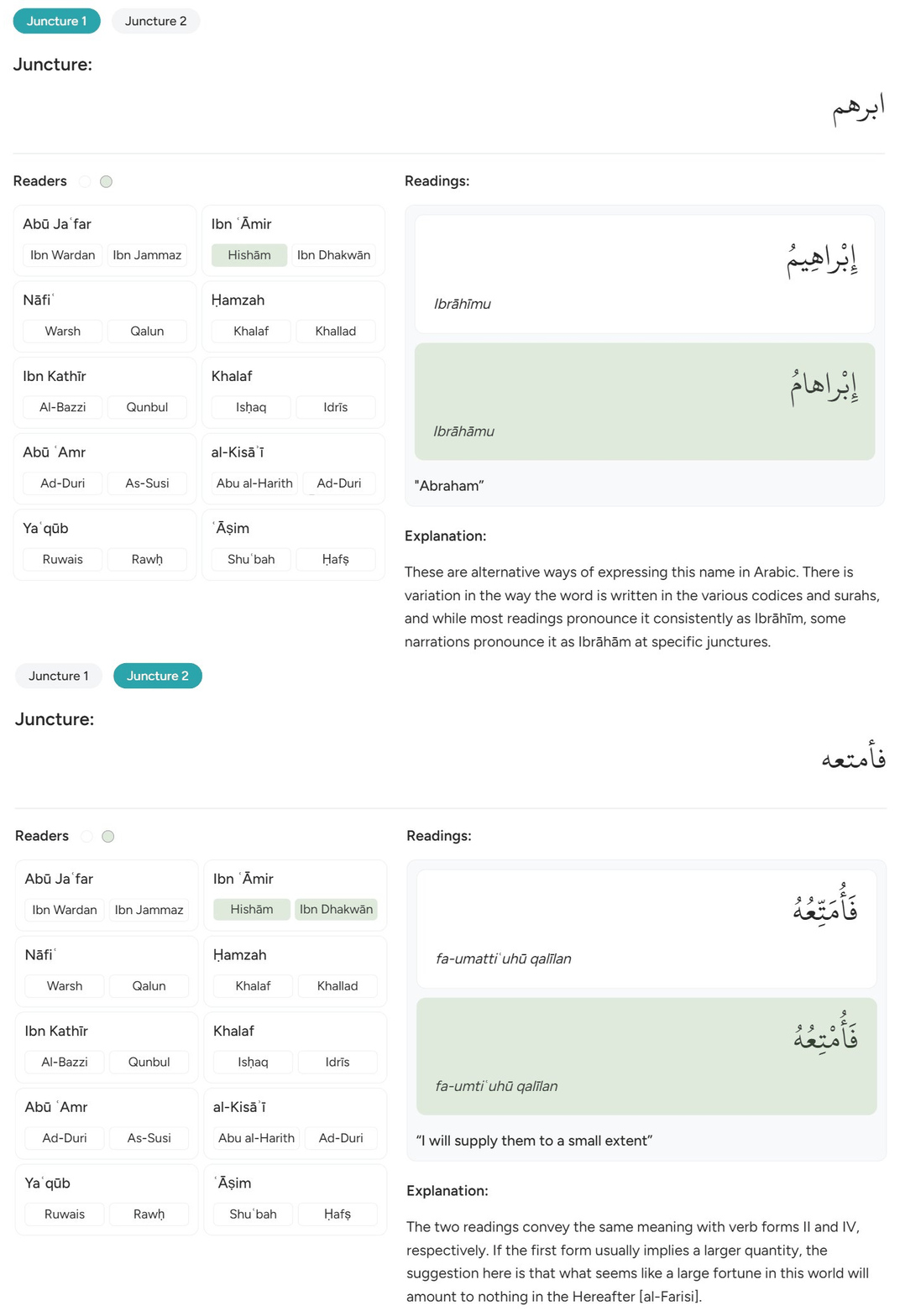
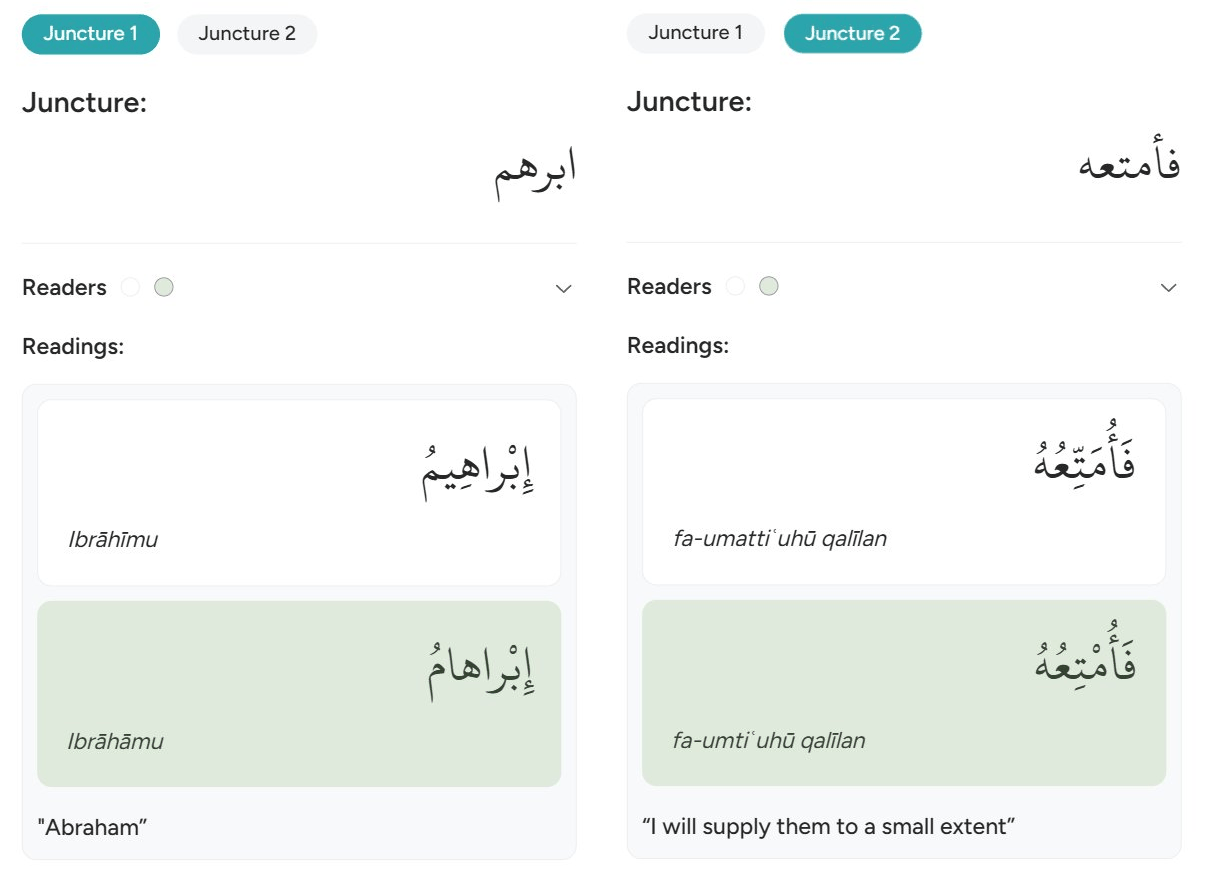
Figure 1: Within a particular ayah, there may be one or more junctures which contain reading diversity. This means that the authoritative traditions have preserved two or more ways to recite that word. The differences may pertain to vowels and/or consonants.
What are the Qira’at?
The Quran is the revelation received by the Prophet Muhammad ﷺ, via the Angel Gabriel, over two decades. It is the very speech of Almighty God, delivered in the Arabic language and then preserved through both recitation and writing through all these centuries.
There is only one Quran, and this same text is affirmed and recited by Muslims in every region of the world, and printed in their mushafs (physical copies). The same trustworthy experts who passed down the Quran through all these generations have carefully documented the range of acceptable ways to recite it, known as the qira’at (readings).
The origin of this variety is the nature of the revelation itself, and the flexibility granted to the Companions of the Prophet ﷺ to recite in ways most fitting to their Arabic dialects. When you recite the Quran today, or read it from a page, you depend upon the meticulous transmission of every letter by scholars who learned directly from their teachers, in a chain going back to the Prophet ﷺ.
Scholars of Islam have unanimously agreed upon Ten Readings, known as the qira’at mutawatirah or “canonical readings”: these are considered equally to represent the Quran, and to gather various options in pronunciation, along with some variety in meanings contained within the Quranic revelation.
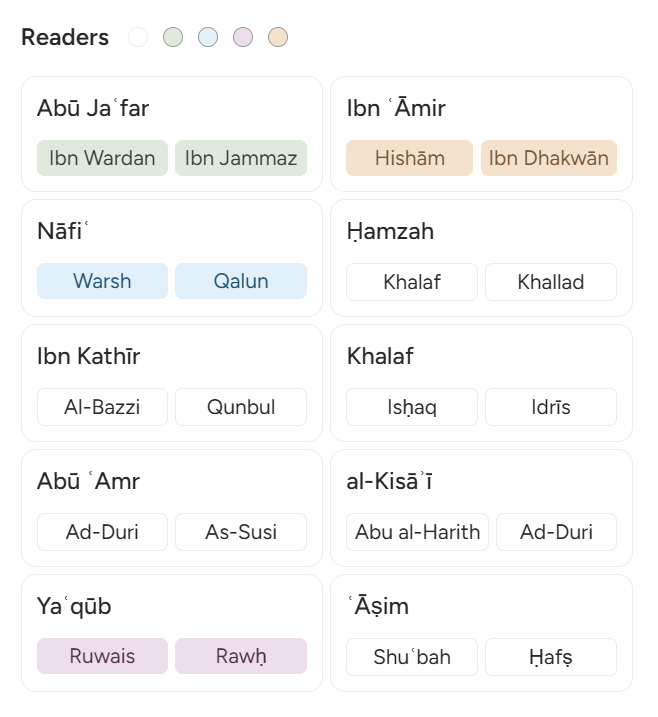
Figure 2: Each juncture has a Readers table which has ten larger boxes for the canonical Ten Readers (Qaris), including a mention of their regions of origin. Each box has two smaller tabs for the respective Transmitters (Rawis) from these Readers. For ease of use, the tab for Hafs ‘an ‘Asim is white, along with those which agree with that reading. Other readings/tabs are grouped with various colours, which do not indicate anything specific.
Are they widely known?
Of these Ten Readings, there is one in particular which has become very widely used across the world today: this reading is named after Imam ‘Asim b. Abi al-Najud, and a leading Quran reciter of Kufa (Iraq) who was from the generation after the Companions. In particular, the transmission of ‘Asim’s reading by his son-in-law Hafs b. Sulayman (the transmission known as “Hafs ‘an ‘Asim”) became extremely widespread some centuries ago, and many people today only experience the Quran through this particular reading.
Though it is not necessary for every person to know details about the multiple qira’at, it is important to understand that the Ten Readings are equally authoritative as ways to recite the Quran, even if some of them are known mainly to specialists. As a matter of fact, some readings other than ‘Asim are popular or dominant in particular regions, such as the reading of Imam Nafi’ in North Africa.
It is also important to note that, aside from matters restricted to pronunciation, the Ten Readings are actually unanimous on most of the Quran and only diverge at specific points: usually with two acceptable options, and sometimes more. It should not be thought that they are ten separate texts.
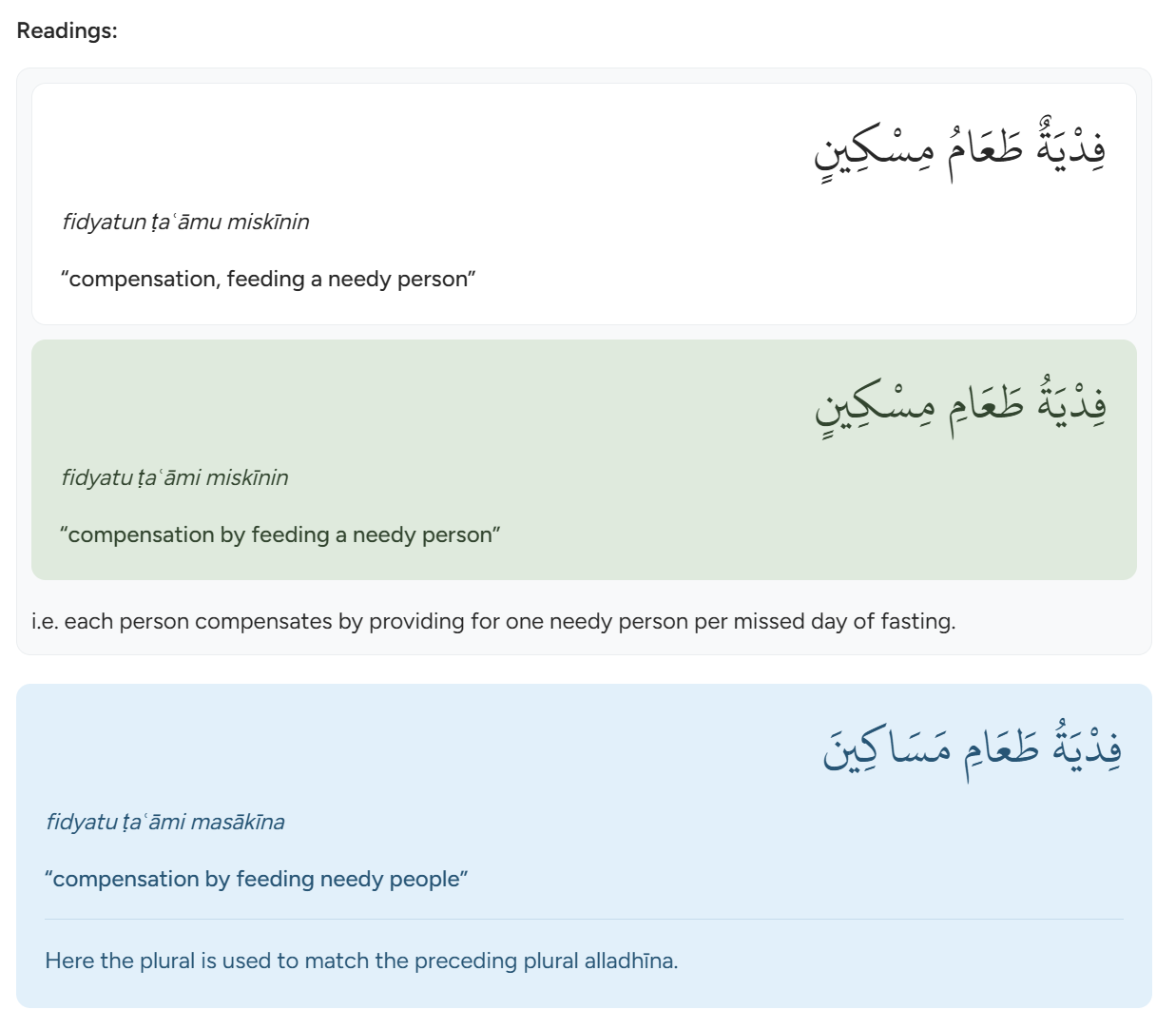
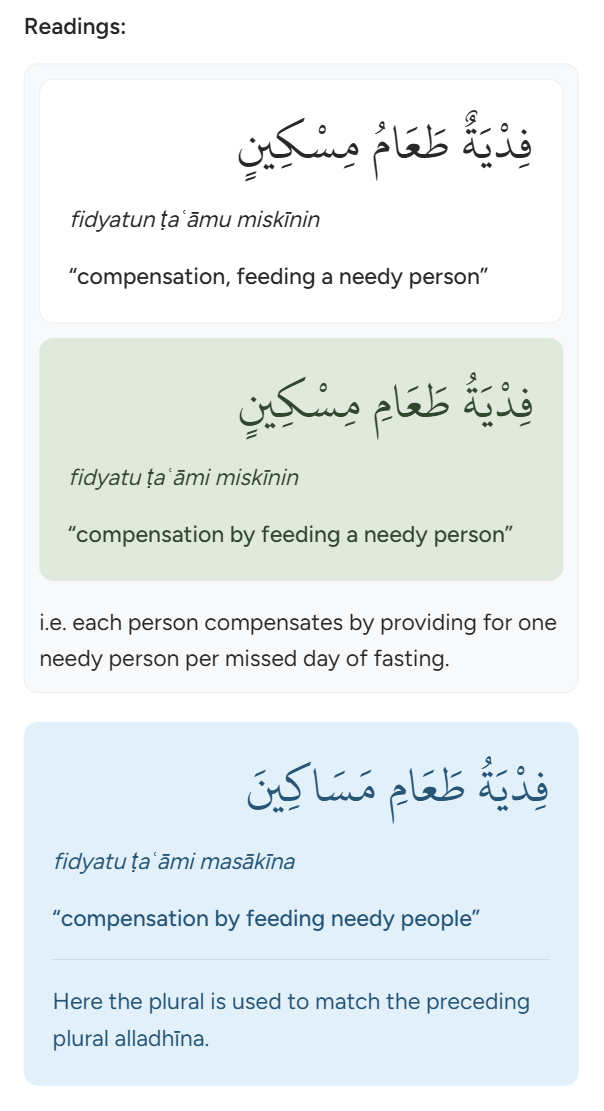
Figure 3: The different ways of reciting each juncture are presented on separate lines, with different colours (Hafs ‘an ‘Asim is listed first, in white, due to its modern predominance). The Arabic pronunciation is spelled out along with transliteration. Where relevant, a specific translation is provided for each reading, along with some explanation drawn from authoritative sources.
How do they differ?
It is important to remember that each qira’ah independently presents the Quran, so it is more than enough to learn one of them through a trusted teacher. However, studying the Ten Readings opens up further layers of beauty, eloquence and guidance in the divinely-intended variety within the Revelation.
The majority of differences between the Readings are solely related to pronunciation, and so they are accounted for by the “principles” (usul) of recitation. This goes back to the fact that the Arabic language has always had some varieties and dialects. For example, some dialects, and therefore some Quranic readings, pronounce the ending of a word like “Wa-ḍ-ḍuḥā” (93:1) with a vowel sound called imalah, between ‘a’ and ‘i’, so it sounds like this: “Wa-ḍ-ḍuḥē”. Some would retain the hamzah sound (glottal stop) in words like mu’min, and others lighten it: mūmin.
Sometimes, the differences are between the word forms themselves, though again this is mostly related to dialectal options. For example, the same verb is vocalised by some as yaḥsabu and others as yaḥsibu, with exactly the same meaning (‘to reckon’). This may also involve derived verb forms, e.g. anzala (form IV) and nazzala (form II) mean the same (‘to send down’).
In a smaller number of cases, the difference may be something like singular vs. plural, e.g. “the word(s) of your Lord” (kalimah vs. kalimāt), and these generally amount to the same meaning. The same can be said of word endings and conjugations, which result in slightly different grammatical forms.
It can therefore be seen that the vast majority of differences between the qira’at have no effect on meaning, or amount to the same meaning. However, enrichment of meaning is one of the overall effects from the Ten Readings which should be appreciated, as it has been studied thoroughly in the tradition of Quranic commentary (tafsir).
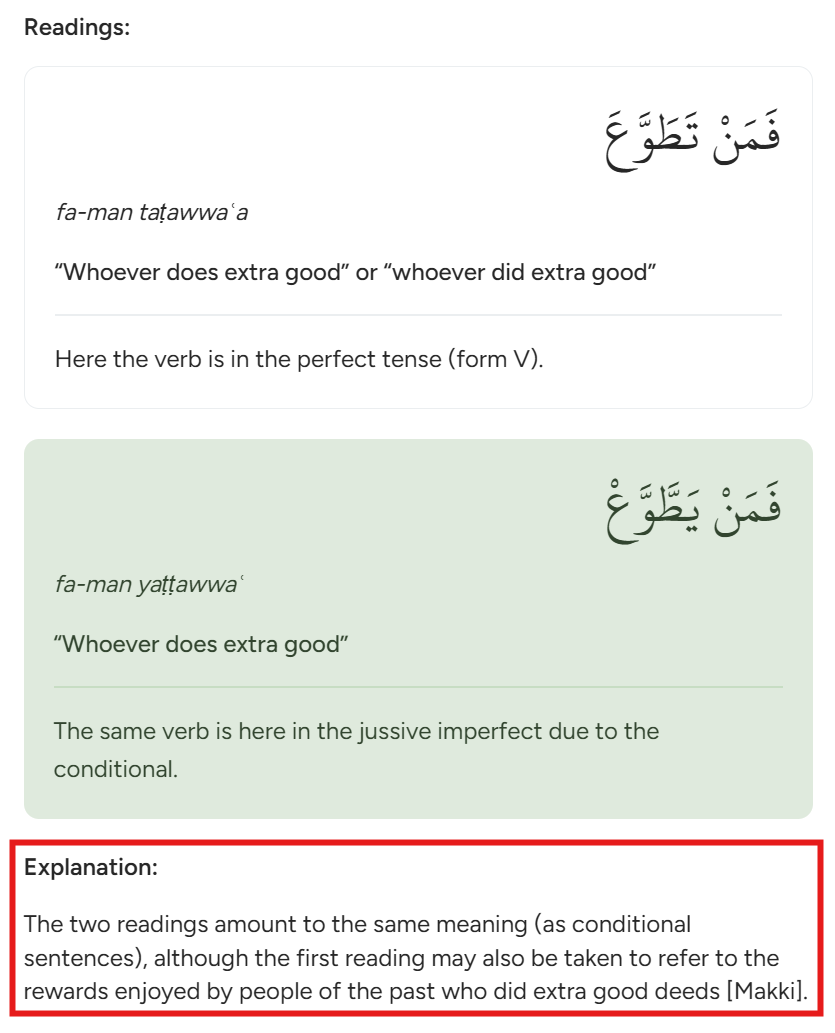
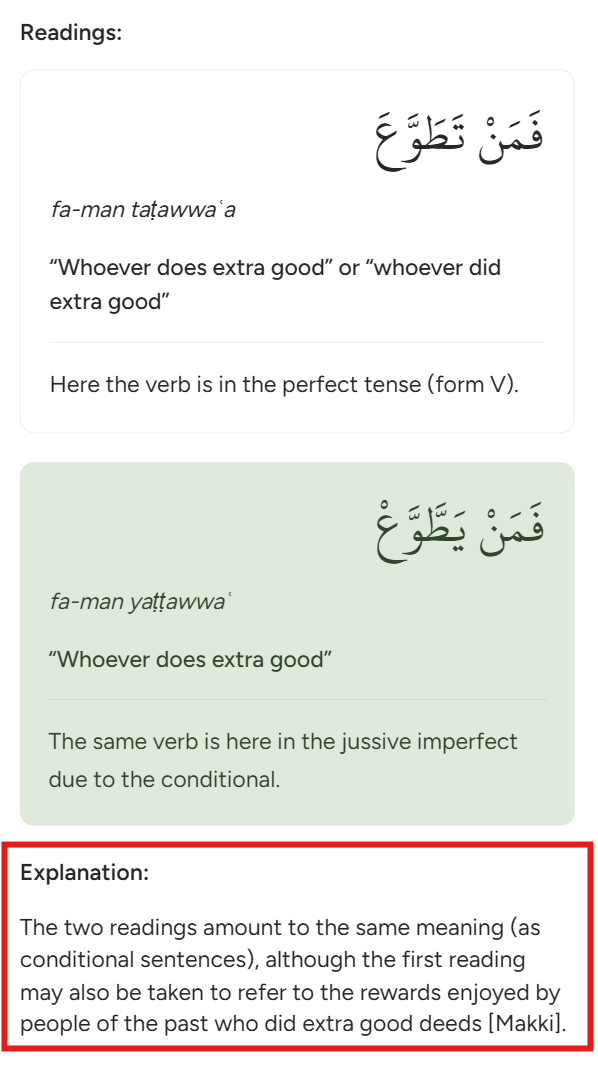
Figure 4: Our Qira’at Files place emphasis on clarity and understanding. In addition to line-by-line explanations, every juncture also concludes with an explanation of how the various Readings complement each other or amount to the same meaning. Names in square brackets refer to scholarly sources which contain further detail.
For example, in Surat al-Fatihah (1:4), the two authentic readings are māliki and maliki (with and without alif, affecting vowel length), meaning that Allah is both the Owner of the Day of Judgement, and the only King on that day. These are complementary meanings, and in fact increase our appreciation of the ayah, while each reading is independently clear and conveys broadly the same meaning.
In the previous example, we can see that both readings accord with the same Arabic spelling, since some letters (functioning as long vowels) may be taken as implied by the same group of Arabic consonants. In this case, both māliki and maliki fit with the ‘skeletal form’ M-L-K (ملك).
There are many other examples of complementary readings being connected with the same word in the original Quranic scripts, since they were flexible in several ways. There was no consistent use of marks to distinguish between similar consonants, nor were there vowels to indicate pronunciation and grammar. In a very small number of cases, two readings may depend on different spellings found within the official copies sent by Caliph ‘Uthman to the Muslim regions.